
 Ludo Schildermans (°1961) is freelance publicist en redacteur.
E-mail: ludo AT datatestlab DOT com
Websites: Cort door de bocht; Ludo Schildermans
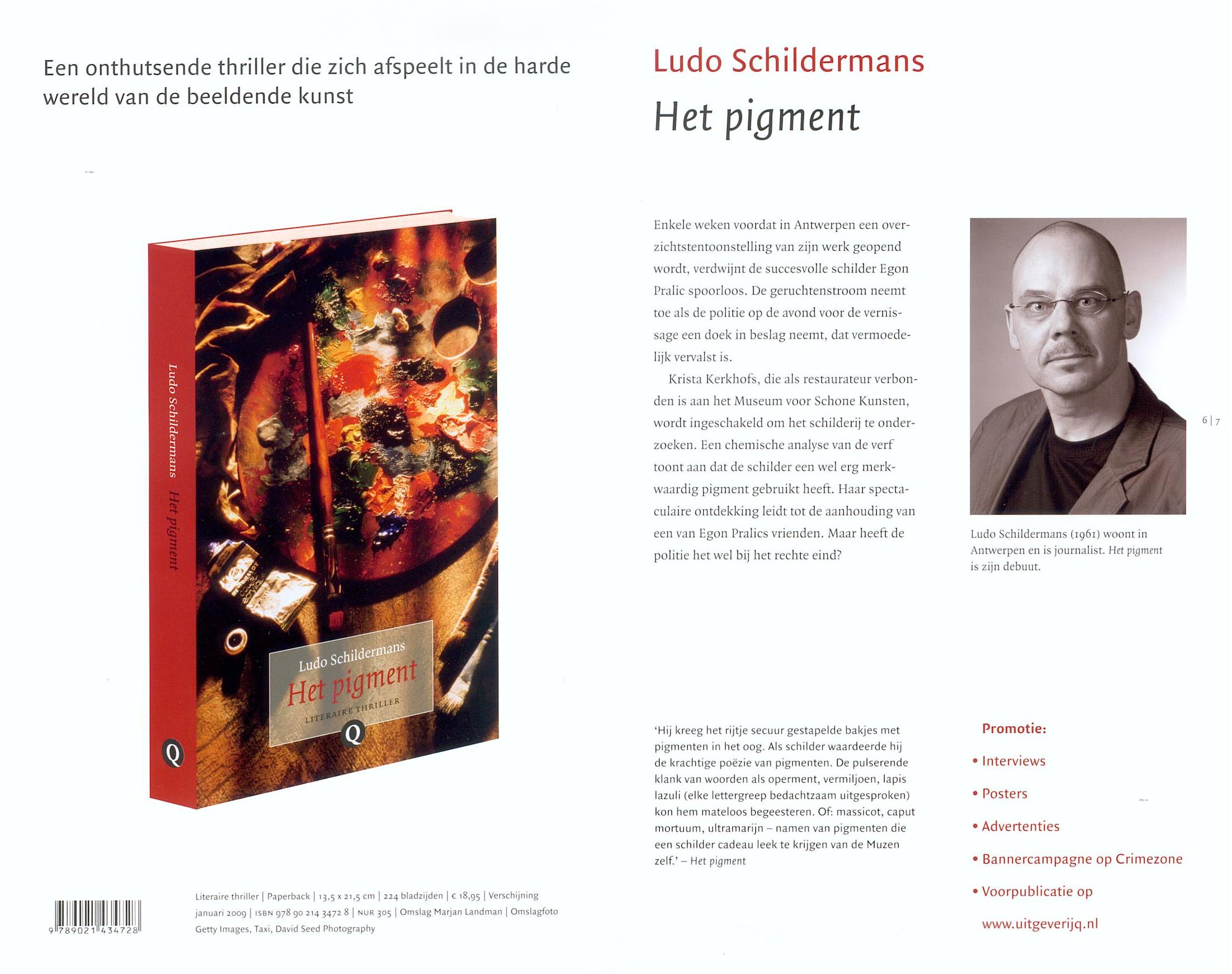
In januari 2009 verscheen zijn romandebuut Het Pigment bij Uitgeverij Q, een imprint van Uitgeverij Querido in Amsterdam. In 2011 verschijn zijn tweede roman Getekend bij uitgeverij Houtekiet in Antwerpen.
In 1998 won hij de Britse Good Book Guide Short Story Competition met zijn kortverhaal ‘Cheating the Cyclops’. Hieronder een uittreksel uit het artikel en de tekst van het kortverhaal:
As the recognised magazines for writers, Writers News and Writing Magazine are often invited to cooperate with other magazines in the running of short story competitions. This recently happened with the Good Book Guide, where Writers News suggested that a library theme and setting would make a suitable competition for a magazine which is very much about books.
The winning entry was from Ludo Schildermans of Antwerp, and his dark story was about the destruction of libraries under some future totalitarian regime. At least we assume the story is about a totalitarian regime; the idea of the burning of books has become a kind of fictional symbol for the suppression of ideas—but there is a hint in the story that perhaps books had in any case fallen out of use—until what we take to be the Bible was reprinted. So perhaps Ludo Schildermans’ story is not such a dark tale after all: it points to the timeless strength of the Bible, and also we are left with the thought that somewhere hidden in a cave are the seeds of a future generation of literature.
Eén gedachte over “Ludo Schildermans”
Reacties zijn gesloten.